
Direct-to-Consumer Experience for PepsiCo’s Snacks.com
Pepsi Co

Project
From Catalog to Experience:
Redesigning Snacks.com
Timeline
16 weeks
Team
6 members
Collaborations
My Role
Researcher & Product Designer
Overview
This industry-sponsored project explored how a direct-to-consumer snack platform could better support discovery, decision-making, and engagement for college students.
Our team designed a feature ecosystem that reduces decision fatigue, introduces visible motivation, and enables collaborative purchasing. The work reframed snack shopping from a transactional catalog experience into something participatory, social, and worth returning to.
My focus: Designing momentum within the browsing experience, helping users move from exploration to confident purchase.
UX Researchers, Product Designers,
Visual Designers, PepsiCo. Stakeholders.

TL;DR
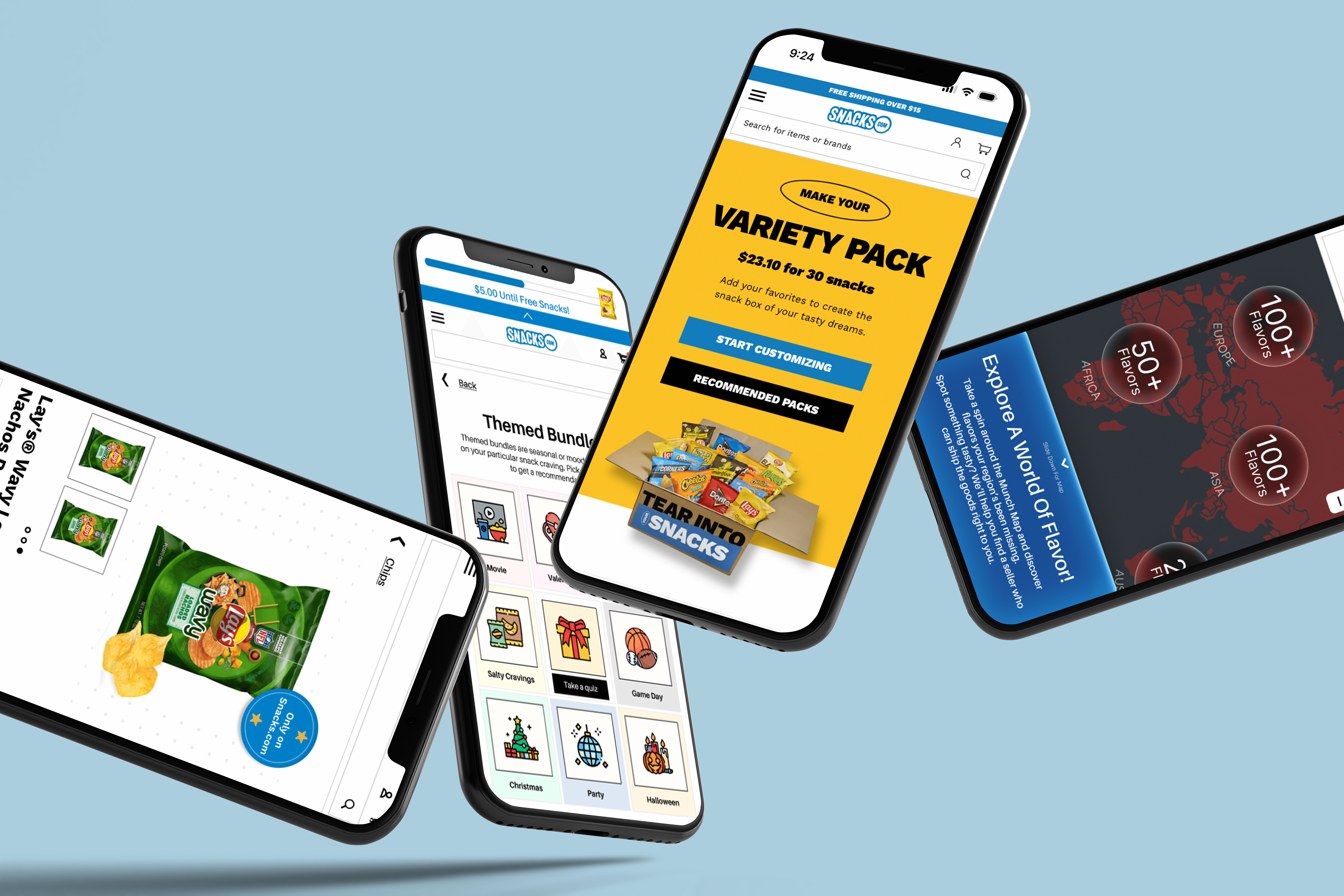
Watch the experience
We designed a feature ecosystem for
Snacks.com in collaboration with PepsiCo
that helps college students move from
browsing to purchase through motivation,
simplified decisions, and collaborative
experiences.
The final concept reframed snack shopping
from a catalog into an engaging,
social journey.

A prototype walkthrough showcasing
how discovery, visible progress, bundle building,
and favoriting work together to move users
from browsing toward confident purchase.
MOBILE UI
UX RESEARCH
E-COMMERCE
The Opportunity
Direct-to-consumer platforms allow brands to build relationships beyond retail shelves.
However, snack shopping online often mirrors a static catalog, optimized for browsing, not
decision-making.
Students encounter abundance but little guidance, resulting in abandoned carts and fragmented
discovery.
Current Market Landscape
Typical Snack Browsing — Pain Points
Overwhelming Catalog
Zero Personalisation
Friction at Checkout
1
😤
TRIGGER:
Hungry between lectures,
no cash on hand.
2
😵
DISCOVERY:
Scrolls through 40+ items,
feels overwhelmed by choice.
3
🤔
EVALUATION:
Compares across 3 tabs, reads
reviews, loses momentum.
4
😬
DECISION:
Adds to cart, hesitates on
price and shipping cost.
5
😔
ABANDON
(KEY DROP-OFF):
Closes the app, grabs chips
from the vending machine
instead.
$42B
US Snack Market
+9% YoY
72%
Students Buy Online
2× growth since 2021
3.4s
Avg Decision Window
before cart abandon
71%
Abandoned Carts
in snack category
Student Journey Snapshot
How Might We…
Help students discover snacks, feel confident in their choices, and stay motivated
to complete a purchase?
Research - Understanding Behaviour
Interviews and synthesis revealed that the challenge wasn’t access to snacks, it was maintaining
momentum toward purchase. Students explored widely but often hesitated when making final
decisions.
Recurring behavioral patterns shaped how users browsed, evaluated, and committed
Budget anxiety
Curiosity balanced
against cost sensitivity.
price
check
compare
pack
size
remove
items
wait for
free
delivery
Social Discovery
Trends and peers
shaped experimentation.
tiktok
snacks
friend
recs
trending
flavours
new
flavours
Overchoice
Abundance slowed
commitment.
edit
cart
sroll a
lot
save
for
later
too
many
options
Not sure
what
to pick
Shared Planning
Snack purchases were
often collaborative.
movie
nights
different
tastes
plan
together
want
variety
Reward Motivation
Visible incentives
increased commitment.
free
shipping
close
to
threshold
discount
push
feels
worth it
Key patterns
• Budget awareness shaped what felt like a safe choice
• Social influence encouraged experimentation but delayed decisions
• Decision fatigue led to abandoned carts
• Snacking was frequently planned as a shared activity
• Visible rewards increased motivation to complete purchases
Conclusion
These findings reframed our direction: the experience needed to support confidence,
visible progress, and shared decision-making rather than simply expanding product navigation.
Design implication
Support momentum
from curiosity to
commitment.
What students said
“I keep adding things
but never know what
to remove.”
“I’d buy more if my
friends could pick too.”
“I want to try new snacks
but don’t want to waste
money.”
From Features to Ecosystem
Rather than solving a single touchpoint, we designed a connected system of features that support
users across discovery, evaluation, and purchase.
Research revealed that hesitation occurred at multiple moments: browsing, deciding, coordinating, and
committing. Instead of adding isolated solutions, we structured our direction around behavioral drivers
that influence momentum throughout the journey.
We organized our product direction into four behavioral pillars.
Motivation
Make progress visible and rewards attainable
Social Purchasing
Enable coordination and shared confidence
Decision Support
Reduce cognitive load and clarify intent
Emotional Discovery
Make exploration engaging rather than
overwhelming
Feature Ecosystem
User Momentum
Curiosity →
Confidence →
Commitment
Motivation
Munch Meter
Free shipping threshold
Reward feedback
Social Purchasing
Collaborative builder
Shared variety packs
Friend coordination
Decision Support
Bundles
Saved items
Quiz-driven packs
Emotional Discovery
Munch Map
Global flavors
Trend-based exploration
A connected feature ecosystem designed to support user momentum across the entire purchasing journey.
Journey Map
01
Discover
Munch Map
Trends
02
Explore
Bundles
Quiz
04
Explore
Collaborative
builder
03
Evaluate
Saved Items
Munch Meter
05
Purchase
Rewards
Feedback
Each feature supports a different moment in the journey, preventing momentum breakdown.
Early Exploration
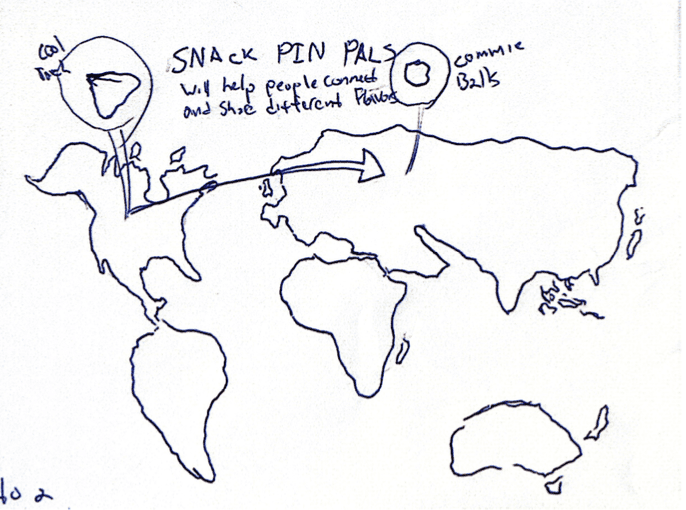
Munch Map Version 1
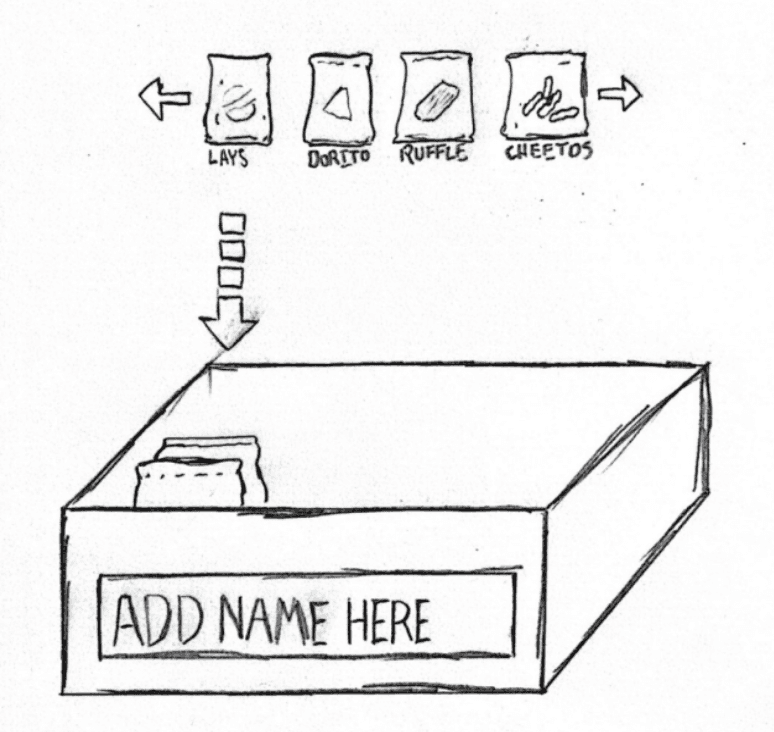
Bundle Builder Version 1
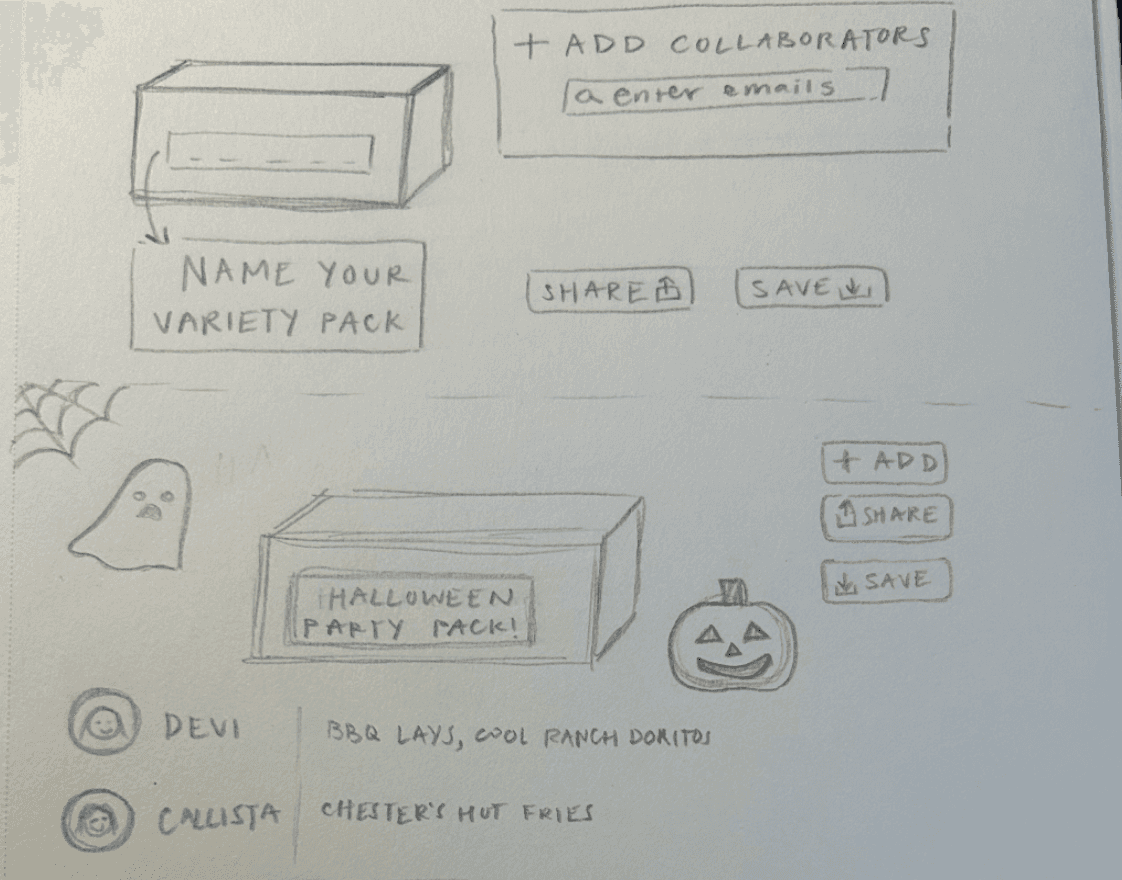
Shared Variety Packs
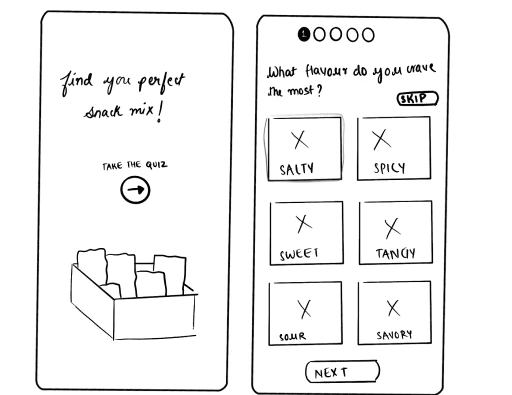
Snack Quiz
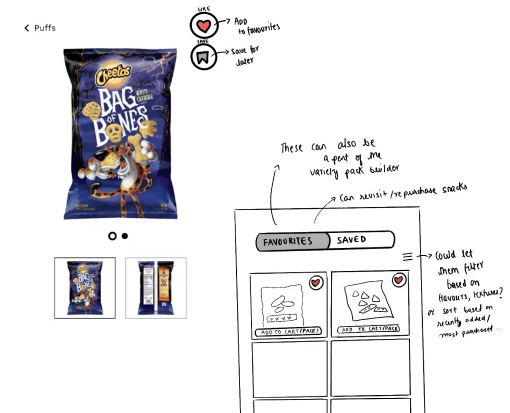
Favourites and Saved
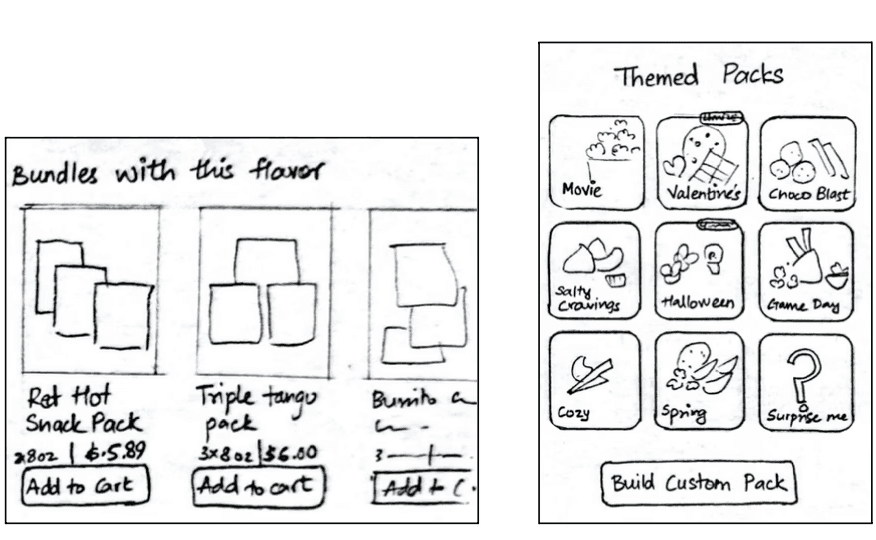
Themed Bundles
Early exploration focused on identifying leverage points across the browsing and decision process.
The ecosystem works because each element supports momentum rather than competing for attention.
Instead of layering features onto the platform, we designed them to reinforce each other.
Progress encourages bundling. Bundling increases cart value. Collaboration increases commitment.
Discovery fuels experimentation.
Concept Deep Dives
Each feature started as an insight and became a system. Here's how the five core
concepts evolved from friction points into design decisions.
MOTIVATION
Munch Meter
Visible progress increased engagement by making rewards feel attainable rather than distant.
Integrating the bar directly into browsing encouraged cart building and repeat interaction
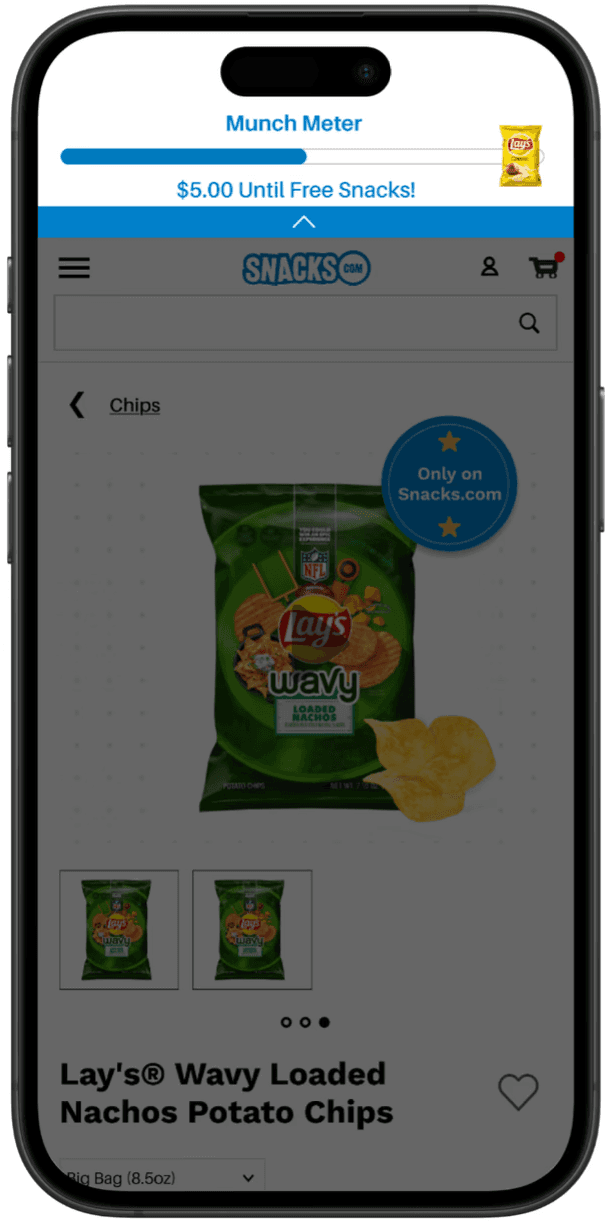

Persistent
progress
visibility
Near-goal
reinforcement
FINAL EXPERIENCE
01
KEY INTERACTIONS
02
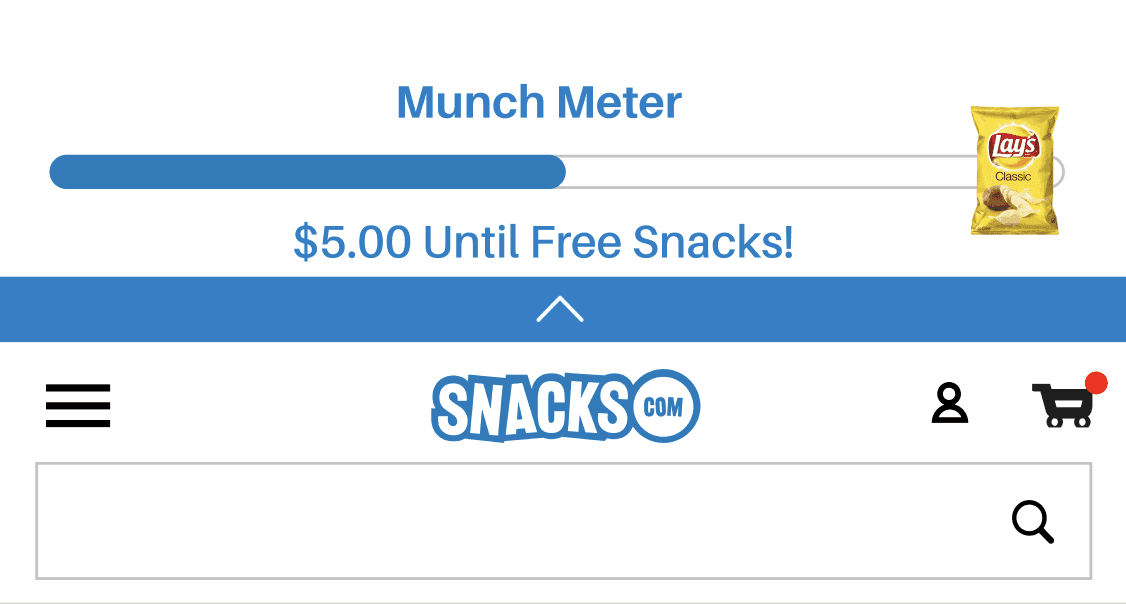
A) Progress visible during browse
B) Threshold shown as spend
remaining
C) Unlock state changes bar
color + icon, reward feels real
ITERATION
03
Hidden until checkout.
Too late to influence
behavior.
V2 - Inline
Persistent while
browsing. Motivates
during decision.
V1 - In-cart Only
Progress transformed rewards into momentum.
DECISION SUPPORT
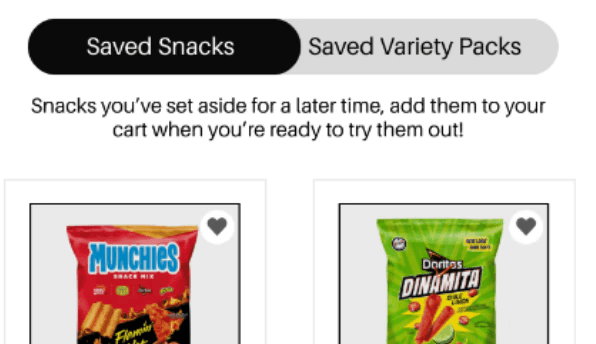
Saved Items
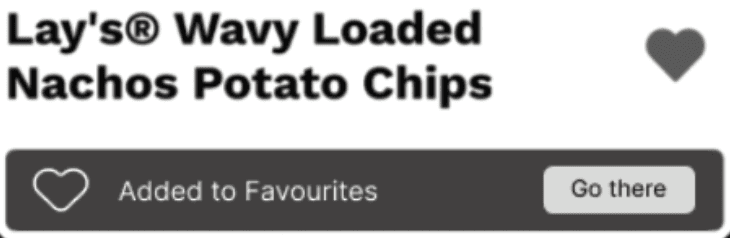
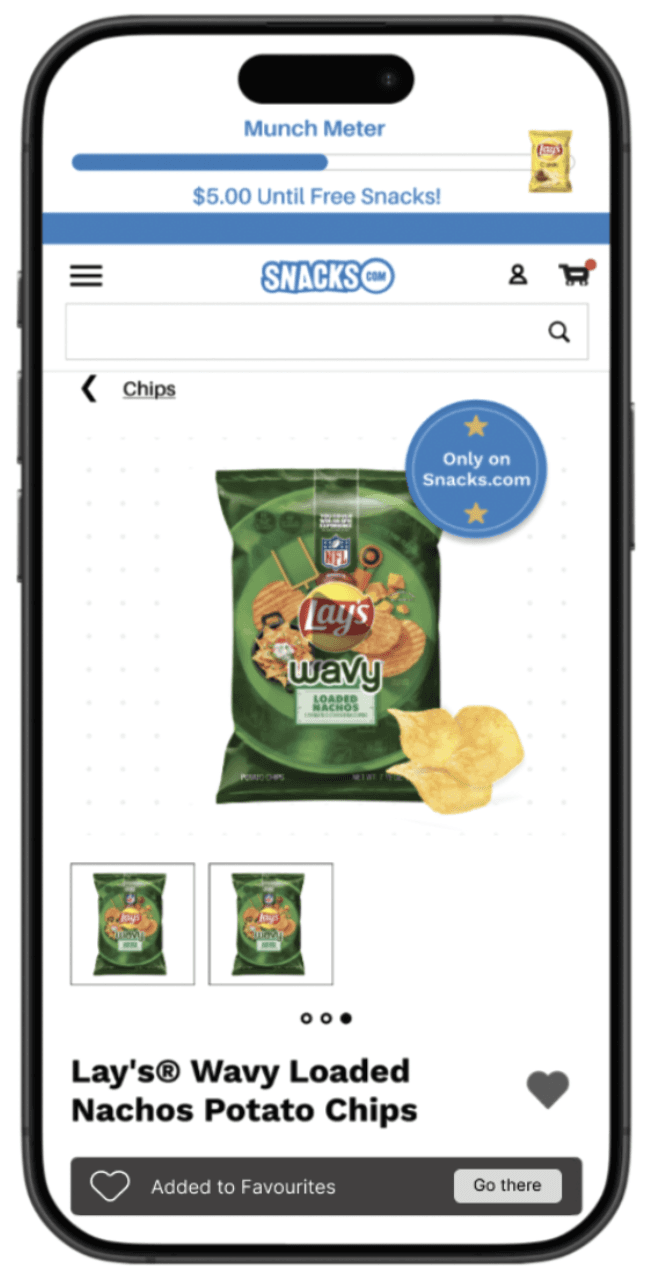
Users treated "favourite" and "save" as the same behavior. We simplified actions to reduce
cognitive load and decision friction.
KEY INTERACTIONS
02
A) One action, no ambiguity
between "favourite" and "save"
B) Saved list accessible inline,
closes the loop without
navigating away
C) Hierarchy: save = passive hold,
cart = active commit
ITERATION
03
2.3s avg. hesitation

V2 - One Action
0.4s avg. decision

V1 - Two Actions
Clear saved
state feedback
Single unified
action
Quick
revisit access
FINAL EXPERIENCE
01
Small simplifications create large behavioral clarity.
Bundles moved from recommendation to utility.
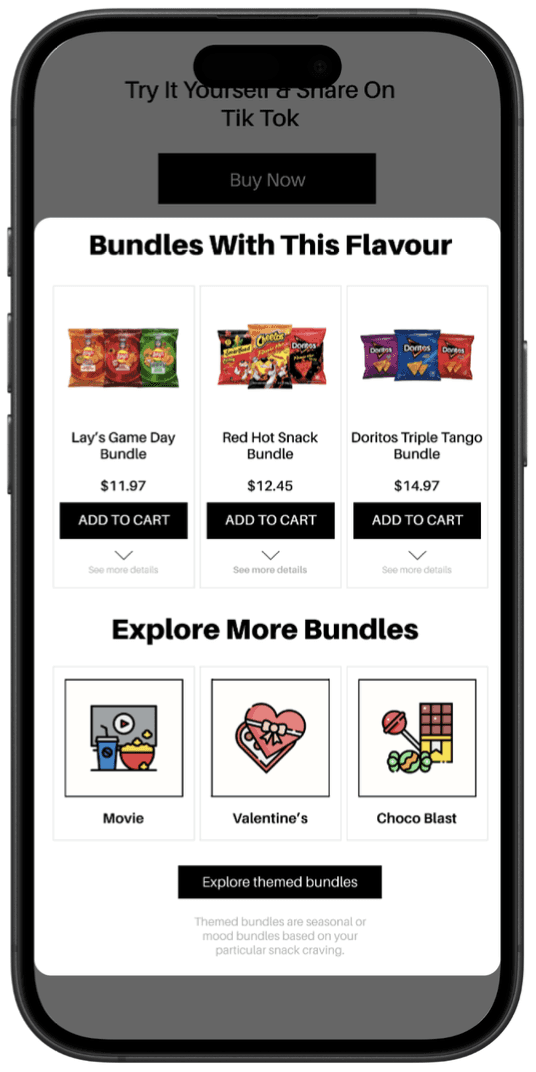
Pre-curated
selection logic
Context-driven
bundle theme
One tap
add-to-cart
FINAL EXPERIENCE
01
ITERATION
03
Generic, no occasion
context

V2 - Event Pack
Context/ Occasion
based bundles
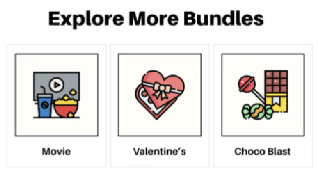
V1 - Product Grid
KEY INTERACTIONS
02
A) Event context label, occasion
becomes the purchase reason
B) Bundle summary visible before
expanding, commit is one tap
navigating away
C) "Add to cart" replaces per-item
decisions with a single action
DECISION SUPPORT
Bundles
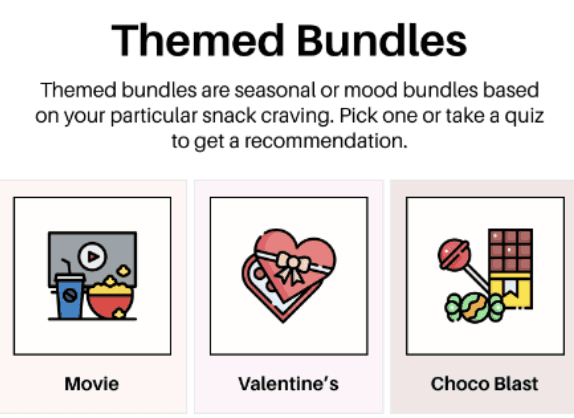
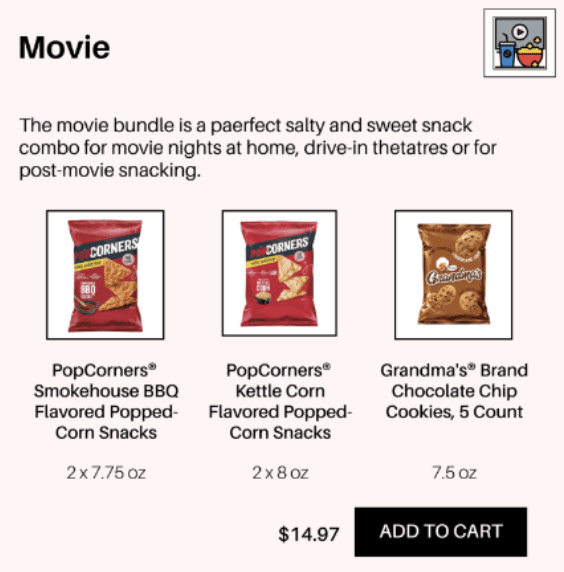
Students associate snacks with events. Bundles evolved into themed, quiz-generated, and
contextual packs that reduce decision effort.
Snacking became participatory.
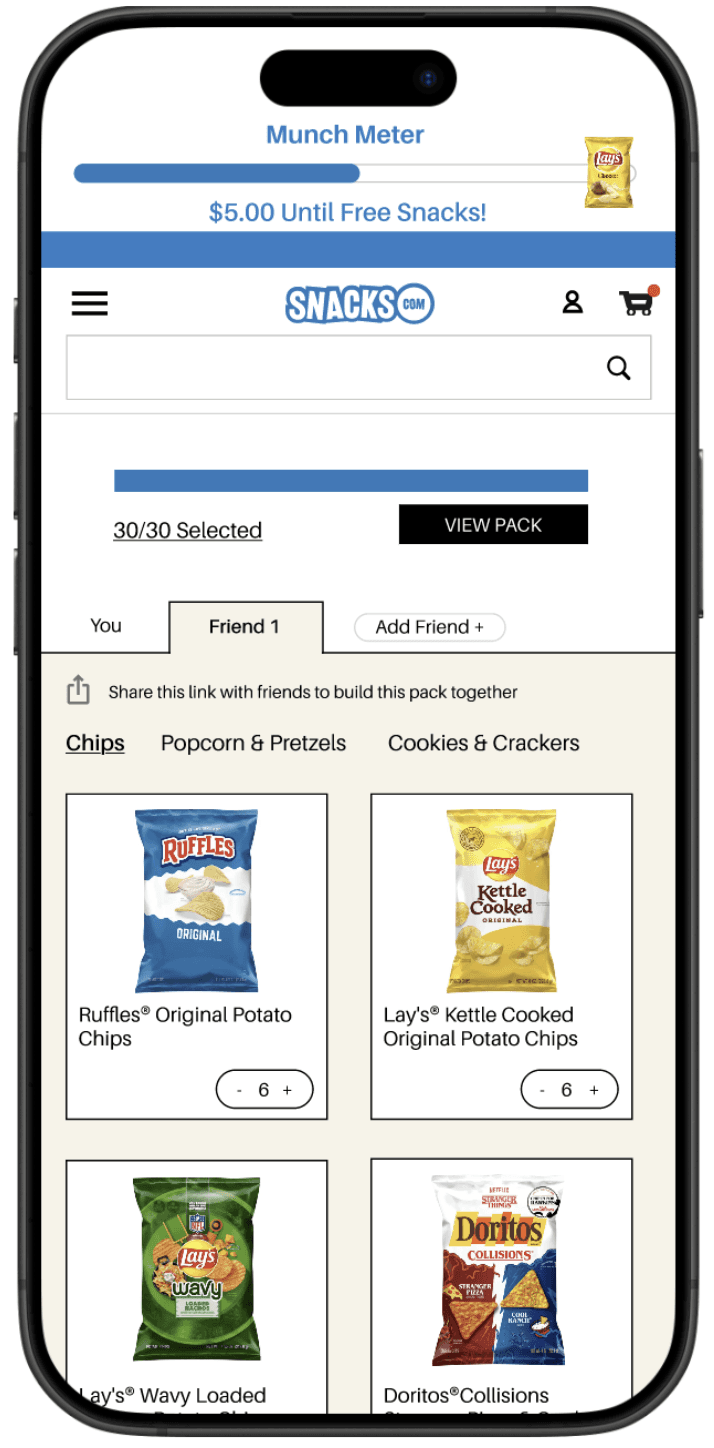
Invite
mechanism
Contributor
visibility
Real-time pack
composition
FINAL EXPERIENCE
01
ITERATION
03
Single user only

V2 - Event Pack
Became
participatory
V1 - Product Grid
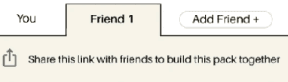
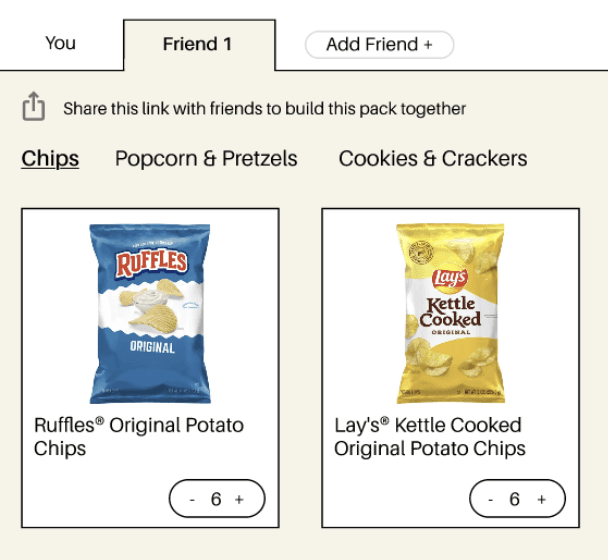
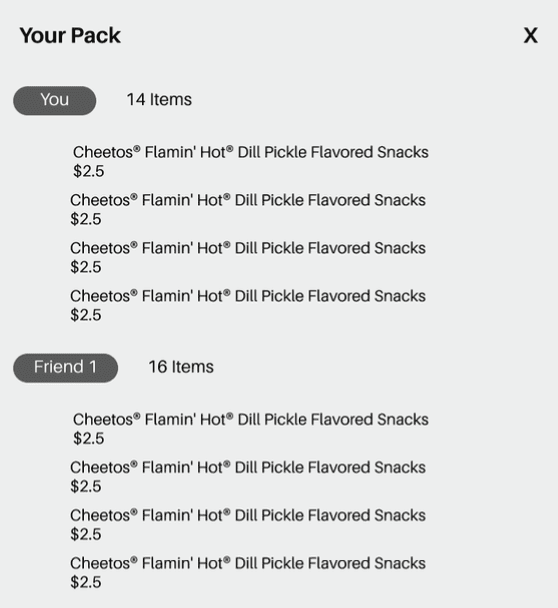
KEY INTERACTIONS
02
A) Shared ownership,
commitment increases
B) Per-item attribution shows
who added what, reduces
conflict
C) Invite CTA persistent ,group
can keep adding until
checkout
SOCIAL PURCHASING
Collaborative Builder
We designed a shared variety pack builder that allows friends to contribute before purchase,
reframing checkout as coordination.
Discovery became exploratory rather than exhaustive.
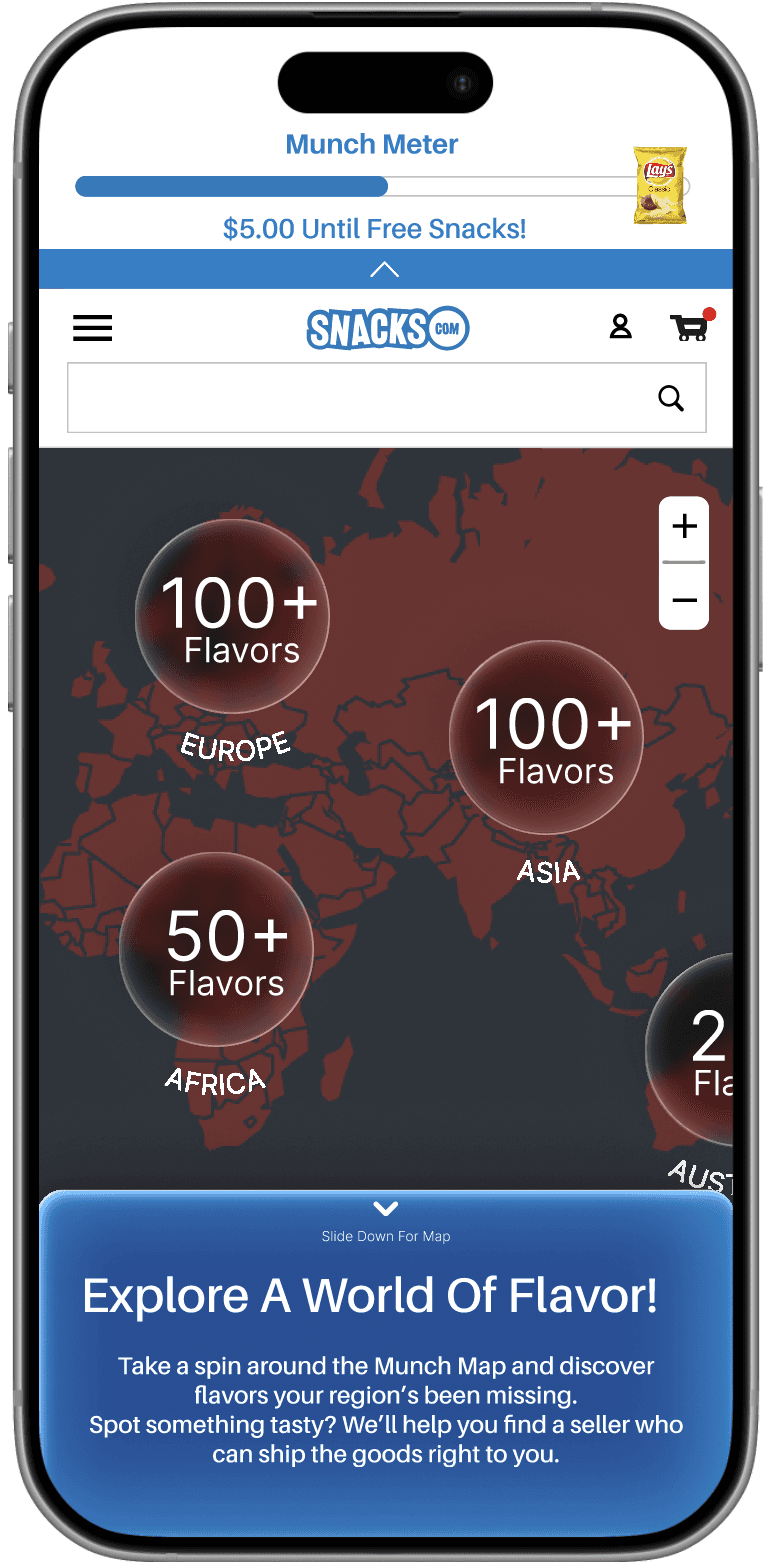
Spatial
exploration
model
Region-based
filtering
Exploratory
entry point
FINAL EXPERIENCE
01
ITERATION
03
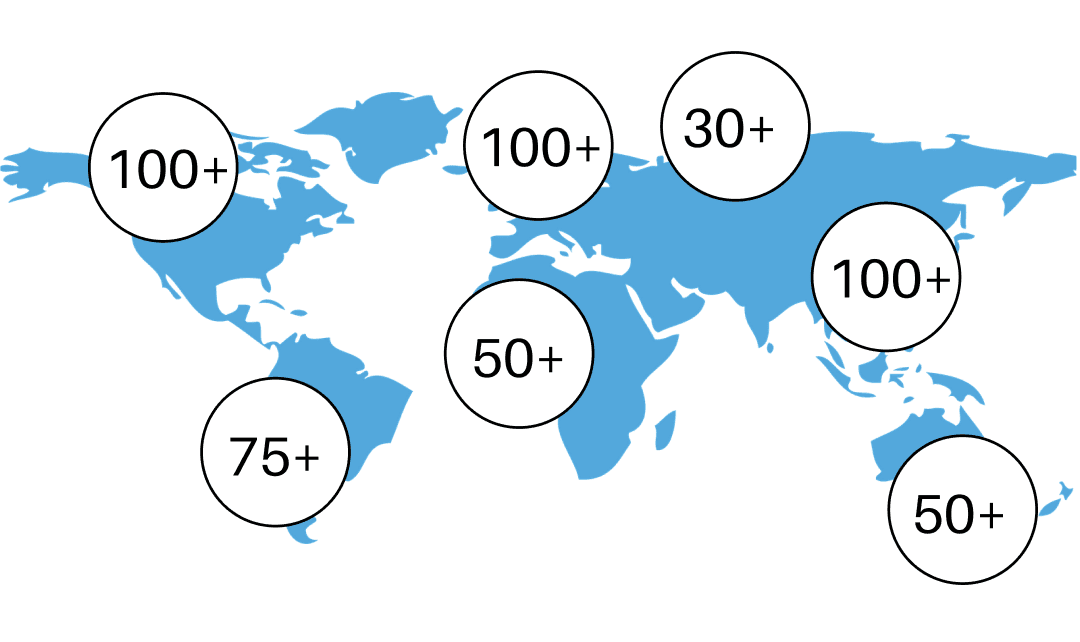
Static. No sense
of place.
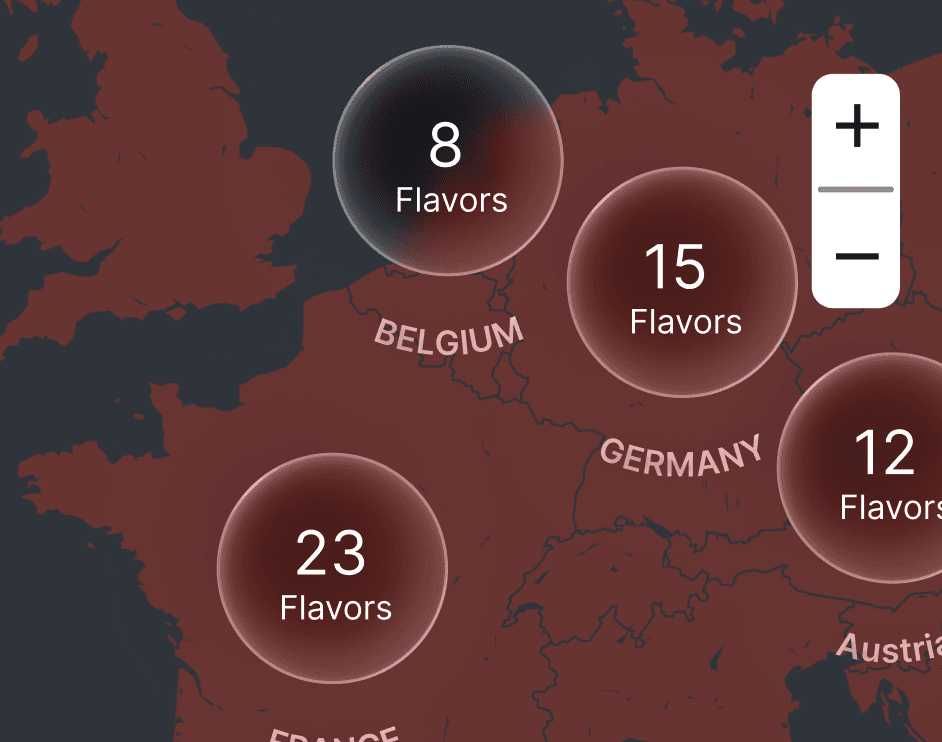
V2 - Spatial Map
Interactive map,
allowing exploration
V1 - Static Map
KEY INTERACTIONS
02
A) Region selection = product
reveal, place = entry point
B) Tooltip previews region
before commit
C) Allow quick region switching,
exploration without pressure
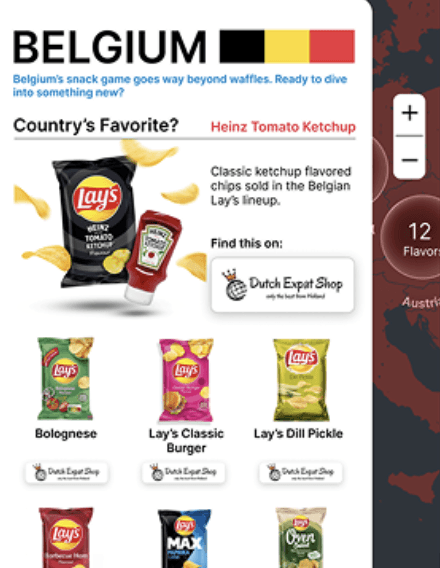
EMOTIONAL DISCOVERY
Munch Map
Spatial exploration introduced novelty and play, encouraging experimentation
without overwhelming users.
Impact
Usability testing on the redesigned concepts showed increased clarity and
confidence in decision-making. Participants responded positively to visible
progress indicators and simplified bundle options, noting that the experience felt more
guided and less overwhelming.
The redesigned screens reduced hesitation during evaluation and made reward thresholds
feel attainable rather than distant.
While the project remained conceptual, testing feedback indicated stronger engagement and
clearer purchasing intent compared to earlier iterations.
What I Learned
This project shifted my thinking from designing screens to designing behavior.
Engagement is built through momentum, not moments
Sustained interaction emerges from small, reinforcing cues across the journey. Progress visibility
proved more powerful than added incentives in motivating action.
Clarity drives commitment
Reducing choices and simplifying actions lowered hesitation. Removing friction created more
impact than introducing additional features.
Systems outperform standalone features
Designing connected interactions across discovery, evaluation, and purchase created stronger
behavioral alignment and clearer business potential.
View Detailed Documentation